Argentina's austerity cuts drive pensioners onto the streets
Week after week, pensioners have been protesting in front of Congress in Buenos Aires. Some of the hardest hit by President Javier Milei’s policies, they are fighting for their pensions, justice and dignity.
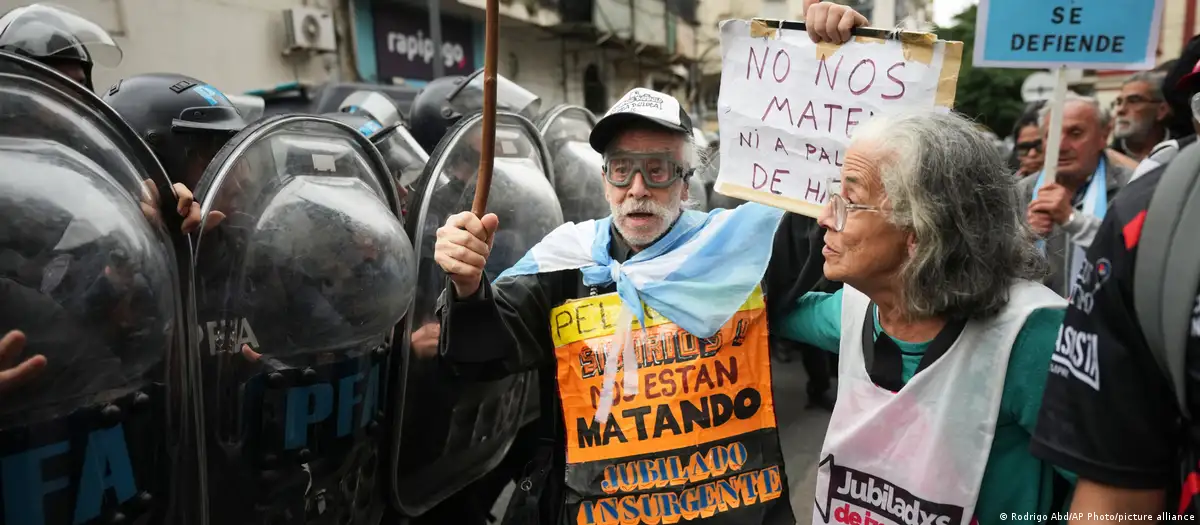
Wednesday resistance
Every Wednesday, retired people have been gathering in front of Argentina's parliament building to demand higher pensions. Their protests reflect the harshness of the government's austerity measures, as they are struggling the most from declining incomes and the ever rising cost of living.
Pensioners in crisis
Olga Beatriz Gonzalez, 79, chants anti-government slogans in front of Congress in Buenos Aires. From the government's perspective, the cuts are necessary to curb inflation. However, pensioners' incomes are dwindling; many cannot even afford their medication or must rely on financial help from their children.
Fighting for justice
President Javier Milei has implemented numerous cuts in the public sector and reduced social spending. In August, he vetoed three bills that had previously been passed by Congress. These bills concerned a 7.2% increase in pensions, higher bonus payments and expanded benefits for people with disabilities.
A moment of enjoyment
Alberto Schocron regularly attends protests in front of Congress. But the psychologist also makes sure he finds moments to relax. Some nights, he dances tango with friends in his Buenos Aires apartment — a moment of joie de vivre despite a pension barely high enough to live on.
Dancing to resist
For many in Argentina, dancing is much more than just movement — it is an expression of identity, community and resistance. Graciela Baum, 79, practices classical dance with her teacher Francisco. It's a passion that gives her strength. But her pension is not enough to pay for the medication she needs. "Without the support of my children, I couldn't survive," she told The Associated Press.
Reality check
Baum regularly takes part in the protests in Buenos Aires. In Argentina, the legal retirement age is 65 for men and 60 for women, based on a full contribution period of 30 years.
Many in poverty
Currently, the average monthly pension in Argentina is less than 385,000 pesos (around €230 or $267), which is well below the official poverty line. For a household of three, this stands at around 898,000 Argentine pesos. Many pensioners are no longer able to cover their expenses, particularly medication and utility bills.
Protest, hope, future
Maria Rosa Ojeda drinks mate tea in her apartment. Although the 69-year-old pensioner lives two hours away from Congress, she tries to regularly take part in the protests. The political conflict over pensions is coming to a head. For millions of older people, their economic livelihood depends on it.
Intergenerational struggle
Delia Donn, 78, leans on a police officer guarding Congress during one of the weekly demonstrations. In July, Argentina's parliament attempted to push through pension increases despite Milei's opposition, but the president prevailed. He justified his veto by arguing that the spending would jeopardize budget stability.
Sticking together
Olga Beatriz Gonzalez is pragmatic in the face of a difficult reality: in her small apartment, the 79-year-old prepares meals for neighbors in need, financed by donations. President Milei has announced reforms for 2026 and promised to boost funding for pensions, health, education and people with disabilities. Nevertheless, pensioners feel abandoned by the state.