Bangladesh: Tarique Rahman poised to be next PM
February 13, 2026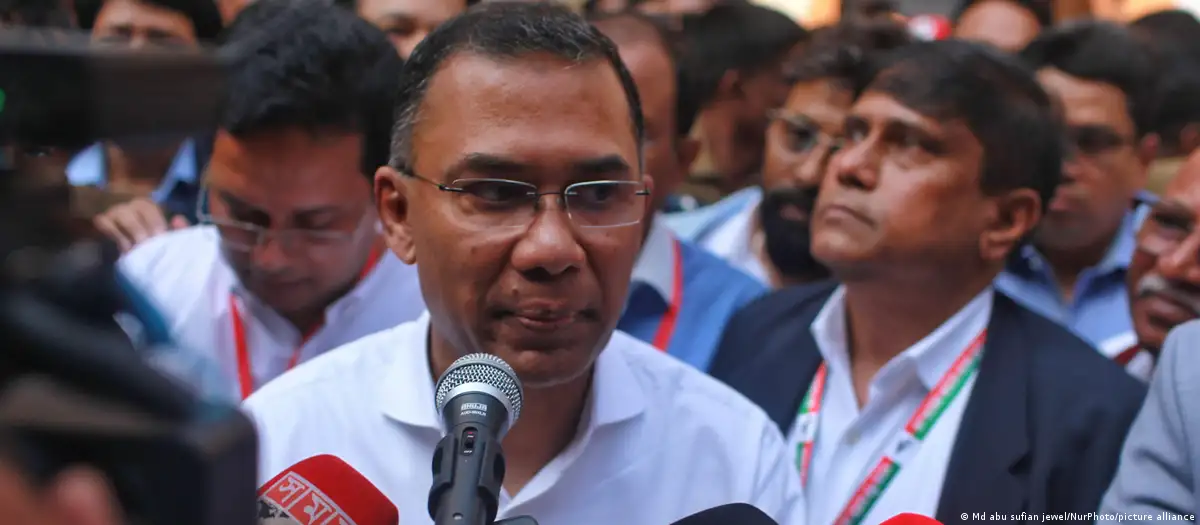
The Bangladesh Nationalist Party's (BNP) prime ministerial candidate, Tarique Rahman, looks set to become the country's next leader after the party claimed a "decisive victory" on Friday.
Rahman returned home in December after more than 17 years in self-imposed exile following mass protests in 2024 that toppled longtime premier Sheikh Hasina.
Going into Thursday's vote, Rahman had set his sights on securing a mandate strong enough to govern alone, and he had pledged to restore peace and stability under a democratic government, following years of increasingly authoritarian rule.
"I firmly believe that if people in Bangladesh come out to cast their votes, conspiracies will not succeed. My best wishes to everyone for ushering in a new democracy," Rahman said ahead of the historic vote.
Who is Tarique Rahman?
Rahman, 60, is the eldest son of former Prime Minister Khaleda Zia — who died shortly after her son's return in December — and former President Ziaur Rahman, the founder of the BNP.
Ziaur Rahman was assassinated during a military coup in 1981. Khaleda Zia entered politics following her husband's death and first held power in 1991.
Rahman has served as the party's acting chairman since his mother's imprisonment in 2018.
Rahman's period of self-imposed exile
Rahman moved to London in 2008 for medical treatment and remained there while facing multiple criminal cases at home.
He was convicted in absentia on charges that included a case linked to an alleged plot to assassinate Sheikh Hasina.
Those rulings were overturned after Hasina was removed from power in 2024, clearing the legal barriers to his return.
Edited by: Roshni Majumdar