Boycotts, bans and no-shows: Notable World Cup absentees
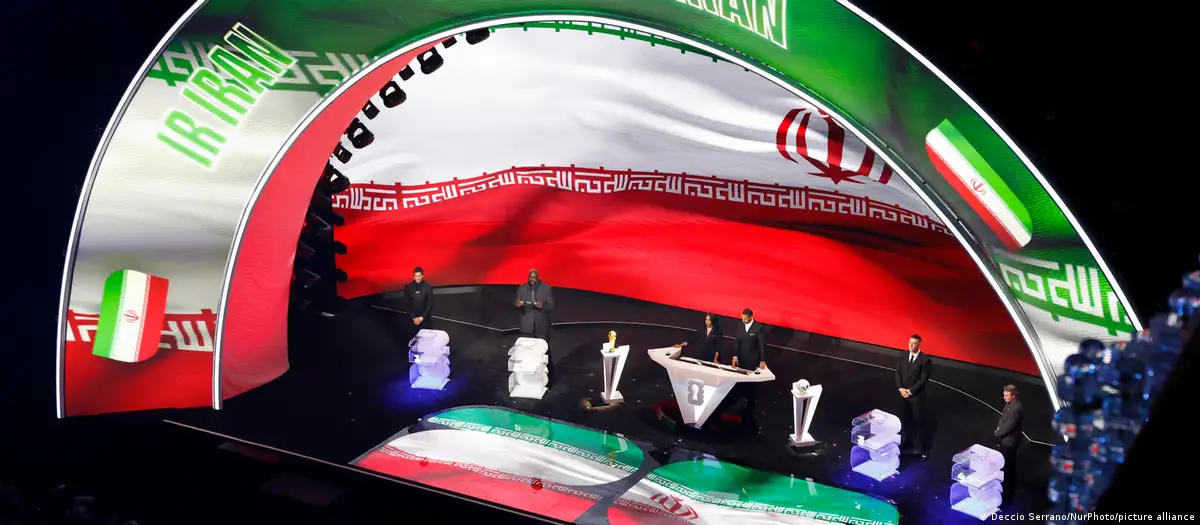
Iran have qualified for the 2026 World Cup in the US, Canada and Mexico, but their participation is in doubt. This would not be the first time a nation has missed the event — for varied reasons.
Uruguay 1930: Europeans
The first World Cup was hosted by Uruguay in 1930 and featured 13 teams, just four of which were from Europe: France, Belgium, Romania and Yugoslavia. The paucity of European teams wasn't due to a boycott but largely had to do with funds being short during the Great Depression and the difficulty of traveling such a long distance by sea. It would be linked to a boycott at the next World Cup.
Italy 1934: Uruguay
Italy both hosted and won their first World Cup in 1934. Being held there meant there were no major barriers to other European teams taking part, but just two came from South America. Uruguay reportedly gave the tournament a miss in protest against the fact that so few European teams had turned out four years earlier. It was the only time a defending champion has missed the subsequent World Cup.
France 1938: Uruguay, Argentina, Austria, Spain
The first World Cup to be hosted by France was hit by another boycott, with Argentina joining Uruguay in refusing to compete due to their shared belief that the event should alternate between Europe and South America. Austria, who had qualified for the event, were also absent, as Nazi Germany had taken over the country two months earlier. Spain didn't participate due to the Spanish Civil War.
Brazil 1950: Germany, Japan, others
Five years after World War II, the World Cup was held in Brazil. The two defeated and occupied Axis powers, Germany and Japan, remained excluded from FIFA. Germany, then divided, had been expelled and Japan suspended in 1945. Both would be readmitted weeks after the conclusion of the World Cup. Several other countries either refused to enter or withdrew before the tournament, for various reasons.
Sweden 1958: Indonesia, Egypt, Sudan, Israel
Pele exploded onto the global football stage in 1958, but largely forgotten is that Israel was still part of the Asian Football Confederation. Israel had won the single World Cup place assigned to Asia/Africa, as several countries had refused to face them. FIFA decided that they couldn't qualify without playing a game, so a playoff was set up. Wales won – keeping Israel out of the World Cup.
England 1966: All African teams
An entire continent boycotted the 1966 World Cup. As FIFA had designated just one World Cup spot to be competed for by teams from Africa, Asia and Oceania, the Confederation of African Football pulled its members out of qualifying. African teams may have been excluded, but not African players; Portugal featured four Africa-born players, including the tournament's top goal scorer, Eusebio (left).
South Africa: 1961-1992
South Africa are to make their fourth appearance at a World Cup this summer, having made their debut in France in 1998 and hosted the tournament in 2010. Until 1991, though South Africa had been excluded from entering qualifying for the World Cup for decades due to apartheid. FIFA had expelled the SAFA in 1961 but readmitted it in 1992 – following the end of the apartheid system.
West Germany 1974: USSR
Chilean captain Francisco Valdes (third from left) and his men took a curious path to the 1974 World Cup after the USSR refused to play a qualifying playoff in the National Stadium in Santiago, where Chile's military junta was known to have been executing political opponents. FIFA declined to move the match and Valdes scored into an open Soviet goal to send Chile to the World Cup.
Iran: 1980s
Iran made their first World Cup appearance in Argentina in 1978, where they earned a single point in a 1-1 draw with Scotland. However, following the Islamic revolution in the country a year later, Iran would miss the 1982 and 1986 World Cups. In 1982 Iran withdrew from qualifying and four years later it was barred from qualifying by FIFA for refusing to play its home games on neutral grounds.
Italy 1990: Mexico
Notable by their absence from the 1990 World Cup were Hugo Sanchez's Mexico. Fans in Italy weren't treated to any of his famous back-flip goal celebrations, because FIFA had banned Mexican teams from football for two years for using four over-age players in their U-20 team at the 1988 CONCACAF U-20 tournament — in what became known as the "Cachirules" affair.
Qatar 2022: Russia
After Russia launched its full-scale invasion of Ukraine in February 2022, FIFA suspended all Russian national and club teams. The ban came weeks before Russia's men's national team were to play Poland in the semifinals of a European World Cup qualifying playoff. Russian teams remain suspended, although FIFA boss Gianni Infantino has recently said that he would like to lift the ban.
USA, Canada, Mexico 2026: Iran
With all three of Iran's group games at the 2026 World Cup to be played in the US and with the US-Israeli war on Iran ongoing, its participation is very much in doubt. Iran has said the team plans to "boycott" matches in the US, but doesn't intend to withdraw from the tournament. FIFA has not indicated any willingness to accede to Iran's request to have their games moved to Mexico.