Déjà-vu? Technicolor retrospective at the Berlinale
Visitors to this year's Retrospective section at the Berlinale film festival are in for a treat: To celebrate the 100th anniversary of Technicolor, the festival is showing 30 spectacular films from an era long past.
Cinematic yearnings
Technicolor, a US company founded 100 years ago, developed various color film techniques. In the mid-1930s, Technicolor set standards; by 1953, a number of masterworks of cinematic history had been filmed in vibrant Technicolor. About 30 Technicolor films will be shown during the Berlinale film festival, opening February 5. The first three-color short film was "La Cucaracha" in 1934.
Blazing trails with Disney
In the 1930s, animated films were largely responsible for the success of the Technicolor system. Technicolor inventor Herbert T. Kalmus worked together with Mickey Mouse creator Walt Disney. Animated movies were easier to realize in color than films with actual people. "Funny Little Bunnies" from 1934 is one of the gems shown at the Berlinale Retrospective.
Colors galore
The 1939 musical "Wizard of Oz" is one of the highlights of Technicolor filmmaking. Directors like Victor Fleming and King Vidor used color as a dramatic element - and the audience loved it. Thanks not least to the revolutionary leaps and bounds made by color film pioneers behind the camera, Technicolor films were box office hits.
Europe catches on
Technicolor was an American invention, and, initially, that's where the technology established itself. But Hollywood also tried to gain a foothold in Europe, and the British film industry soon caught on. The Berlinale shows one of the best British Technicolor films: the 1940 fantasy film "Thief of Bagdad" with Sabu in the title role and German actor Conrad Veidt as the Grand Vizier.
Melodramatic coloring
In the mid-1940s, films in Technicolor were triumphant both artistically and commercially. Even today, the radiant colors in the 1945 film noir "Leave Her to Heaven" with Gene Tierney are captivating. They mirror the full palette of the protagonists' feelings. The film is regarded as one of the genre's outstanding works - despite the irony of a film noir in Technicolor.
Color and dance
The 1945 musical comedy "Yolanda and the Thief," featuring Fred Astaire and Lucille Bremer, wasn't particularly well received because the audience didn't relish seeing Astaire in the role of a criminal. Today, however, it's legendary. A 15-minute dance scene is the highlight of the film - a surrealistic cinematic treat in color and motion.
Vibrant Indian setting
"Black Narcissus" was made by the British director- producer team Michael Powell and Emeric Pressburger two years after the end of World War II. The film tells the story of a group of nuns who set up a hospital in an isolated village in the Himalayas. The entire film was shot in a London studio.
The hues of the Wild West
The 1949 western "She Wore a Yellow Ribbon" is one of US director John Ford's most beautiful films. Ford and his cameraman based much of the film's imagery on paintings by Frederic Remington. The melancholy western was shot on location in Monument Valley, contrasting the red coloring of the sandstone with the azure sky.
Verdant jungle
One of the most impressive Technicolor adventure films is John Huston's 1951 "African Queen" starring Humphrey Bogart. While the film was not shot in the region where the is set - the border area between the Congo, Tanzania, Zambia, and Burundi - it was filmed in an African jungle, letting the audience revel in the emerald brilliance.
Farewell, Technicolor
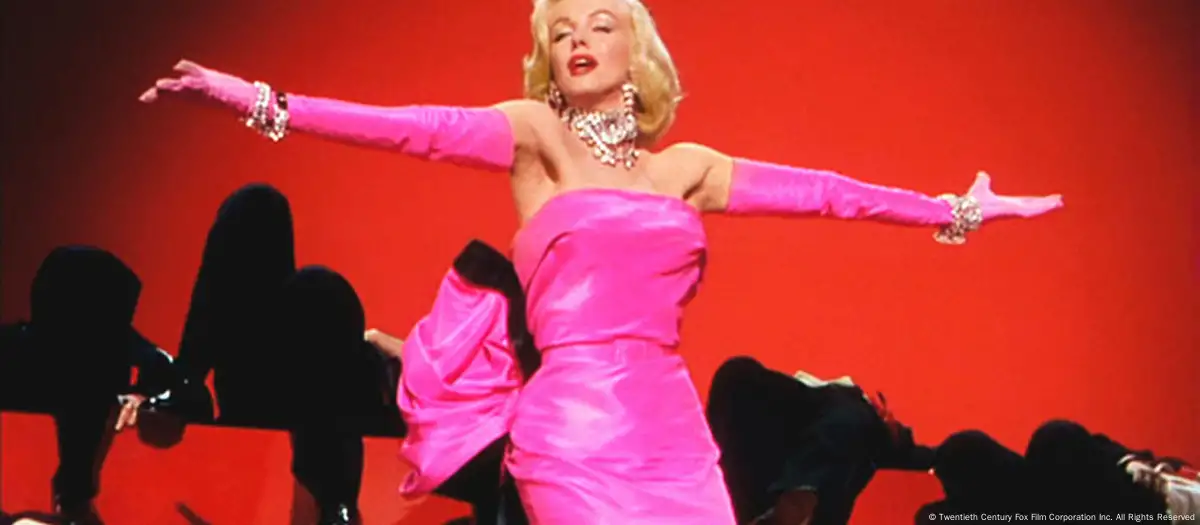
"Gentlemen Prefer Blondes," a 1953 film starring Marilyn Monroe, was one of the last movies produced in Technicolor. More effective techniques followed, and the Technicolor cameras vanished. What remains are copies produced in the Technicolor print technology. The 65th Berlin International Film Festival's Retrospective section is an hommage to a lost era.