Endangered monarch butterflies recover despite threats
Twice a year, millions of monarch butterflies make the long journey between Canada, the US and Mexico. Despite climate change and habitat loss, their population has rebounded — but the situation remains fragile.
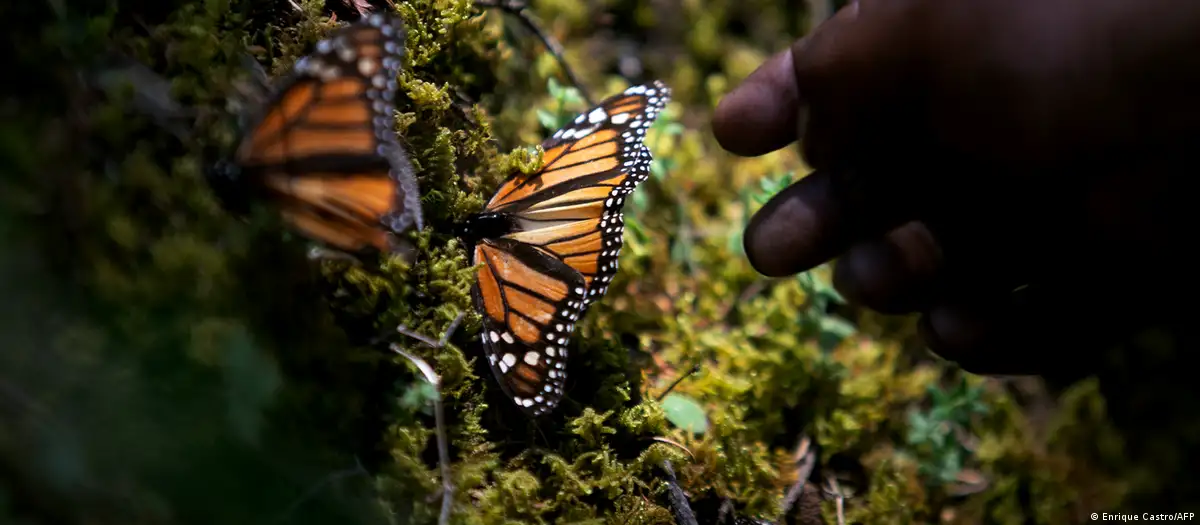
Good news
The number of monarch butterflies has increased significantly, scientists have reported from Mexico. This season, they've identified nine colonies spanning a forested area of approximately 2.9 hectares (about 7 acres) — a 64% increase compared to last year.
Sensitive insects
Environmental organization WWF Mexico has been closely monitoring the population of the endangered butterflies since 1993. But despite the positive news, experts urge caution: compared to the peak levels of the 1990s, the situation for these butterflies remains precarious. Intensive agriculture and the climate crisis continue to cause significant harm to these sensitive insects.
Massive migration
The annual migration of monarch butterflies is an impressive natural spectacle. Every fall, millions of butterflies from Canada and the United States set out on the long journey south. They travel up to 4,000 kilometers (2,500 miles) to spend the winter in the sunny forests of Mexico's Mariposa Monarca Biosphere Reserve.
Colorful colonies
To reliably estimate the number of fluttering butterflies, researchers do not count individual insects but instead measure the area of forest land colonized by these colorful butterflies during the winter months.
Many butterflies, short lifespan
It takes a butterfly population several generations to cover the enormous distance from north to south. The butterflies' lifespan is short, lasting only a few weeks. In the forests of central Mexico, the butterflies eventually cover entire tree canopies; branches and twigs bend under the weight of the densely packed colonies.
Environmental damage
Among the main causes of the dramatic decline in the population since the 1990s are environmental damage caused by the use of herbicides, intensive agriculture and the effects of climate change. Female monarch butterflies lay their eggs exclusively on milkweed plants — but these are becoming increasingly rare.
Increased resilience
Changes in flowering times and weather conditions are also disrupting butterfly migration. "Intensive agriculture and the climate crisis are taking an increasingly heavy toll on these animals," Dirk Embert, Latin America specialist at WWF Germany, told the AFP news agency. The recovery is less a sign of successful conservation efforts than of the animals' increased resilience, he added.
Fragile progress
Experts are calling for stricter regulations in agriculture and forestry along the entire migration route of the butterflies to prevent the population from entering another dangerous decline. They say this is the only way to ensure that this positive trend continues into the future.