Iran war: Israel hits Iranian heavy water nuclear reactor
Published March 27, 2026last updated March 27, 2026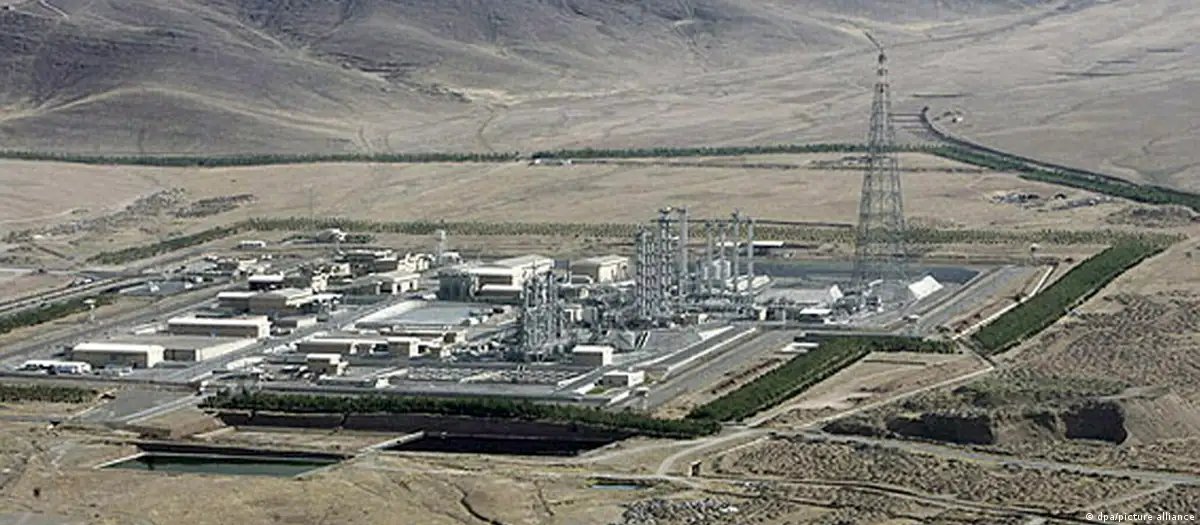
What you need to know
- Israel's military confirmed striking a heavy water facility in Iran
- The UN has called on the US to conclude its investigation into the deadly strike that hit a school in Iran
- German Foreign Minister Wadephul expects direct talks between the US and Iran in Pakistan soon
- Trump extends Hormuz ultimatum as Wall Street suffers sharpest drop since start of war
- Pentagon reportedly considering deploying a further 10,000 US soldiers to the Middle East
Here are the developments in the US-Israel war with Iran on Friday, March 27, 2026:
US and Europe play happy families at Iran-focused G7 talks
We expected Marco Rubio's meeting with his counterparts from Europe, Canada and Japan would be tense. After all, US President Donald Trump had only just been blasting NATO nations for doing "absolutely nothing" to support the US-Israeli war on Iran.
But by the time ministers wrapped up meetings at a picturesque abbey around an hour's drive from Paris on Friday evening, Rubio had softened his tone, and Europeans were stressing convergence.
German Foreign Minister Johan Wadephul seemed relieved; he told reporters here there was "no disagreement" between the US and Germany. He said Washington was not asking for any military support until after the hostilities end.
For now, at least, the US seems to have pivoted away from pressuring allies into joining a war many say is not theirs to fight. Instead, it's asking them to prepare for some sort of post-conflict role.
France's foreign minister reiterated his country was ready to help reopen the Strait of Hormuz — after the fighting stops.
Iran to allow humanitarian aid through Strait of Hormuz
Tehran has agreed to "facilitate and expedite" humanitarian aid through the Strait of Hormuz, Ali Bahreini, the Iranian ambassador to the United Nations in Geneva, said Friday.
Bahreini said Tehran has accepted a request from the UN to let "humanitarian shipments" pass through the strait.
"This measure reflects Iran’s continued commitment to supporting humanitarian efforts and ensuring that essential aid reaches those in need without delay," Bahreini posted on X.
The plan would mark the first breakthrough at the narrow waterway after a month of war.
Iran: Israel hit steel factories, power plant, despite Trump's talk of diplomacy
Israel has targeted Iranian infrastructure, including two of its "largest steel factories," a power plant and civilian nuclear sites, Iranian Foreign Minister Seyed Abbas Araghchi said in an online post on Friday.
"Attack contradicts [Donald Trump's] extended deadline for diplomacy," Araghchi wrote, in reference to Trump's saying Pentagon would "postpone any and all military strikes against Iranian power plants and energy infrastructure" to facilitate peace talks.
While Araghchi did not say US forces took part in the Friday strikes, he said "Israel claims it acted in coordination with the US" and pledged that Iran would exact a "HEAVY" price for the bombing.
US could divert weapons intended for Ukraine, Rubio says
US Secretary of State Marco Rubio has not ruled out the possibility that weapons intended for Ukraine could be used for other purposes.
"If the United States has a military need, whether it is to replenish our stocks or to fulfill some mission in the national interest of the United States, we're always going to come first," Rubio said after talks the Group of Seven (G7) foreign ministers' meeting near Paris.
Rubio stressed that no weapons had been diverted so far, but he said it could happen in the future.
Earlier, German Foreign Minister Johann Wadephul warned that support for Ukraine was weakening amid the war in Iran.
"There must be no compromises when it comes to maintaining Ukraine's defence capabilities," he said, adding that weakening support for Kyiv would only benefit Russian President Vladimir Putin.
Rubio: US can achieve Iran goals without ground troops
The US objectives in the Iran war are to destroy Tehran's missile and drone capabilities and production capacities, as well as its navy and air force, US Secretary of State Marco Rubio told G7 foreign ministers in France.
"We are ahead of schedule on most of them, and we can achieve them without any ground troops, without any," Rubio said.
The US is in the process of deploying thousands of troops into the region, including Marines and paratroopers.
But Rubio said these troops' movements were aimed at providing options to President Donald Trump.
"We are always going to be prepared to give the president maximum optionality and maximum opportunity to adjust the contingencies, should they emerge," he said.
Germany's Merz questions if US and Israel can oust Iran's regime
German Chancellor Friedrich Merz said he had "major doubts" if the US and Israel have an actual strategy in Iran.
"Is regime change really the goal?" he asked at a Frankfurt forum organized by the German daily Frankfurter Allgemeine Zeitung.
"If that's the goal, I don't think they'll achieve it," Merz added.
"Currently, the Americans and the Israelis are becoming more and more entangled in this conflict every day," said the German chancellor.
His remarks come after dozens of German scholars slammed the conservative politician for not clearly condemning the US-Israeli attack on Iran. Merz had made it clear he did not intend to "lecture" US President Donald Trump on international law.
This week, German President Frank-Walter Steinmeier,whose largely ceremonial role is outside of Merz's government, labelled the attack on Iran a "disastrous mistake" and said the conflict was a violation of international law.
US expects to wrap up Iran war in 'weeks, not months' — Rubio
US Secretary of State Marco Rubio said Washington was likely to finish its operations in Iran in "weeks, not months."
At a meeting of G7 foreign ministers in France, Rubio specified that the US military action would finish in the "next couple of weeks."
The US top diplomat also said Iran may start demanding tolls from ships passing through the Strait of Hormuz, according to the Reuters news agency.
The US and Israel launched the ongoing war against Iran some four weeks ago, on February 28. In repsonse, Iran has fired missiles at Israel and some Gulf countries.
President Donald Trump has repeatedly announced Washington was in contact with Tehran and engaged in talks he said were "going very well." Iran has denied those claims.
Iran was attacked by Israel and the US during talks focusing on Iran's nuclear program last year, and again in February.
Iran says heavy water nuclear reactor hit in US-Israeli attack
An Iranian research reactor in Khondab, in western Iran, was bombed "in two stages by aggression from the American and Zionist enemy," an Iranian official told the Fars news agency.
Iranian authorities said there were no casualties and no danger of a radiation leak.
Heavy water is about 10% denser than normal water due to its composition, including a heavier hydrogen isotope. It can be used to slow down neutrons in nuclear reactors, as a basis to produce a radioactive hydrogen isotope known as tritium, and for other scientific purposes.
The Israeli military later confirmed it struck the heavy water plant.
Iranian footballers wear school bags to protest Minab school bombing
A World Cup qualifier between Iran and Nigeria, played behind closed doors in Turkey, ended with Nigeria winning 2-1. The focus, however, was on Iranian footballers showing up to the match with purple and pink school bags as a sign of protest against the deadly bombing of the Minab girl school.
Members of the Iranian football team also wore black armbands during the game.
"At the moment, the result — victory or defeat — is not important. The only important thing is that the players show on the pitch that they are true Iranians and love their fatherland," federation official Mirshad Madshedi told state broadcasters IRIB.
The strike on the girls school killed over 175 people, most of them children, in one of the opening salvos of the US-Israeli war on Iran on February 28.
Initially, US President Donald Trump blamed Iran for the deadly bombing, with Defense Secretary Pete Hegseth insisting that "the only side that targets civilians is Iran."
Images from the scene, however, indicated that the school was hit by a US-made Tomahawk missile. Preliminary findings by a US military investigation, cited by The New York Times, found that the US bombed the school, using outdated targeting data. It was not clear if any US officials or military personnel will be held responsible for the children's deaths.
WATCH — How Iran war affects US support for Trump, Republicans
A majority of Americans — and even some top MAGA figures — disapprove of the US-Israeli war against Iran.
DW asked Republican voters at the CPAC conference for their thoughts on the conflict and the gas price hikes it has sparked.
G7 foreign ministers urge end to attacks on civilians
Top diplomats of G7 nations — the US, the UK, Canada, France, Germany, Italy and Japan, along with the multinational European Union — called for an immediate end to attacks against civilians and civilian infrastructure in the Iran war.
During their two-day summit at the historic Vaux-de-Cerney abbey outside of Paris, the G7 delegates discussed ways "to mitigate global economic shocks… which have direct impacts on our citizens," according to a statement seen by the Reuters news agency.
The diplomats also stressed the need to restore free navigation through the Iranian-controlled Strait of Hormuz.
Separately, German Foreign Minister Johann Wadephul said the Iranian regime would be "well advised to enter into serious negotiations with the United States now." He previously stated that representatives of the two nations would soon be meeting in Pakistan.
UN warns Lebanon's 'humanitarian crisis' could become 'catastrophe'
The United Nations has warned that Lebanon, already experiencing a humanitarian crisis, is hurtling toward "catastrophe" as the war rages in the Middle East and the country is caught up in the tumult.
The US and Israel launched their war against Iran on February 28.
Lebanon has seen more than 1 million people — one-fifth of the nation's population — forced to flee their homes since March 2, when Iranian-backed Hezbollah militants launched assaults on Israel from the country.
Israeli armed forces, which battled Hezbollah fighters during the war in Gaza, have continued to carry out devastating attacks on Lebanon and its capital, Beirut, ever since.
On Friday, UN officials said that more than 370,000 children had been forced to flee with their families.
Israel has issued mass evacuation orders in Lebanon over the past three weeks as airstrikes and ground assaults intensify.
Israeli military attacks have killed at least 21 children while injuring nearly 400 more. According to Marcoluigi Corsi of the UN children's organization UNICEF, a "staggering" 19,000 Lebanese children are displaced by the war each day.
Speaking from Beirut, Corsi said, "The mental and emotional exhaustion weighing on the children of Lebanon is just devastating. There is no safe place for people to go."
Israel's targeted assaults on Lebanese infrastructure, such as bridges, have left some 150,000 Lebanese helpless and cut off from humanitarian assistance, according to the UN Refugee Agency (UNHCR).
Moreover, Israel has also systematically destroyed hospitals, schools and water treatment facilities, meaning tens of thousands are also cut off from safe drinking water and basic services, UNICEF's Corsi said.
Israel's military moved thousands of troops across the border into Lebanon, where Israeli officials have said they intend to take control of the entire area south of the Litani River — some 20 miles (about 30 kilometers) north of the border.
Iranian-linked hackers claim breach of FBI Director Kash Patel's inbox
Hackers known as the Handala Hack Team said they have gained access to the private email inbox of FBI Director Kash Patel.
The Iranian-linked group published photos of Patel, his resume, and alleged personal and professional correspondence between 2010 and 2019.
A Justice Department official told Reuters news agency that the material appeared to be authentic.
The FBI chief did not immediately comment.
Middle East war could bring stagflation to EU, commissioner says
Economic growth will slow considerably in the European Union if the war in the Middle East drags on, Valdis Dombrovskis, the European commissioner for economy, said on Friday.
"It is clear that we are at risk of a stagflationary shock. That is to say, a situation where slower growth coincides with higher inflation," Dombrovskis told reporters.
He added that he expected the EU's economy to grow by 0.4 percentage points less in 2026 than the European Commission forecast, even if the disruptions to energy supplies are "relatively short-lived."
The Commission in November said it expected EU growth of 1.4% in 2026 and 1.5% in 2027.
But he said if the war lasts longer, the negative impacts would be larger.
Dombrovskis also said inflation could be driven up as much as 1 percentage point by the war.
UN says Lebanon at real risk of 'humanitarian catastrophe'
Lebanon is facing a deepening humanitarian crisis that now risks teetering over into a catastrophe, the UN refugee agency (UNHCR) warned.
"The situation remains extremely worrying, and the risk of a humanitarian catastrophe is real," said Karolina Lindholm Billing, the agency's representative in Lebanon, speaking to reporters in Geneva from Beirut.
According to the UNHCR, since March 2, more than a million people — one in five residents — have been forced to flee their homes, and around 150,000 people have been left isolated after bridges were destroyed.
In recent days, Israeli airstrikes have destroyed most of the bridges over the Litani River. This has cut off large parts of southern Lebanon from the rest of the country.
The renewed war between Israel and Hezbollah is taking place against the backdrop of a wider war between Israel, the United States, and Iran.
Israel has said it is considering setting up a "buffer zone" in southern Lebanon.