Iran war plunges Sri Lanka tea industry into crisis
Rising energy prices, sharp export declines and disrupted supply chains are putting Sri Lanka's tea industry under severe pressure. The conflict is exacerbating the crisis for companies and plantation workers.
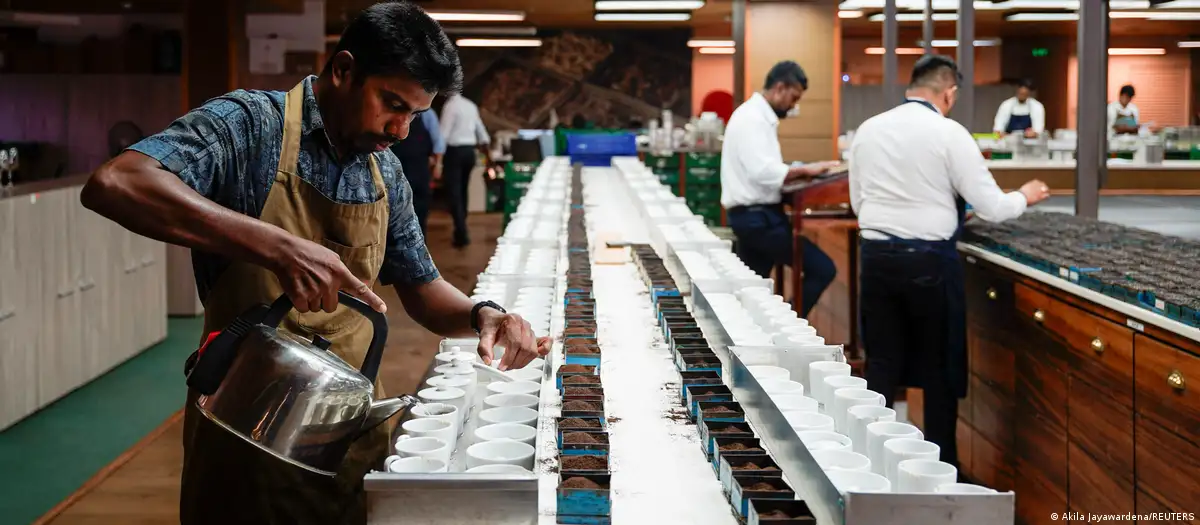
10% of Sri Lankan population depends on tea industry
Rengasami Sathiyaseelan is a tea picker in Sri Lanka's central highlands. He is one of around 2.5 million people — roughly 10% of the country's population — who depend on the island nation's tea industry. Workers typically earn a daily wage of about 1,500 Sri Lankan rupees, the equivalent of around $4.50/€3.90.
Grueling work, pitiful pay
More than half of the plantation workers get by on less than $3.65 a day, which places them below the World Bank's poverty line. "Plantation workers are facing crisis after crisis," Thangawel Ganeshalingam, convener for the Movement for Plantation People's Land Rights, told the Reuters news agency. The group supports workers on around 200 tea plantations.
Back to wood-fired stoves
As the war between Israel, the United States and Iran continues, and global gas prices surge, factory worker Jacintha Malar has reverted to cooking over wood fires for her family. The crisis is also weighing heavily on her employer, Dunkeld Tea Estate, as Sri Lankan tea exports to crucial markets slow down.
Main export markets collapse
Sri Lanka's tea export earnings fell 17.3% year-on-year in March to $114.75 million, as exports to Iraq — until recently the most important destination market — dropped sharply. Shipments to the United Arab Emirates, another key market, declined by 93%. Exports to Iran, one of the main buyers of Sri Lankan tea, have also fallen.
Pivoting to the Americas
Sri Lankan tea company Dilmah sells its Ceylon tea to 108 countries worldwide. Around 30% of its exports typically go to the Middle East. However, supply chains have been disrupted by multiple conflicts. The company is now stepping up its efforts to drive expansion in the US and Canada, as well as in South America.
Fuel costs, logistics 'fueling inflation everywhere'
"We have absorbed the costs for a while, but fuel costs and knock-on effects on logistics, whether between Perth and Melbourne or Colombo and Dubai, are fueling inflation everywhere," said Dilhan Fernando, chairman and chief executive of Dilmah Ceylon Tea Company. Higher global prices are also affecting demand.
Growing economic concerns
The tea industry crisis threatens to further weaken Sri Lanka's already fragile overall economy. In the wake of the Iran war, the government has raised fuel prices by 40%, rationed supplies and declared Wednesdays a public holiday to lower energy consumption. Many families now fear they may no longer be able to secure their livelihoods.