Iran war: Trump calls for 'no more attacks'
Published June 14, 2026last updated June 14, 2026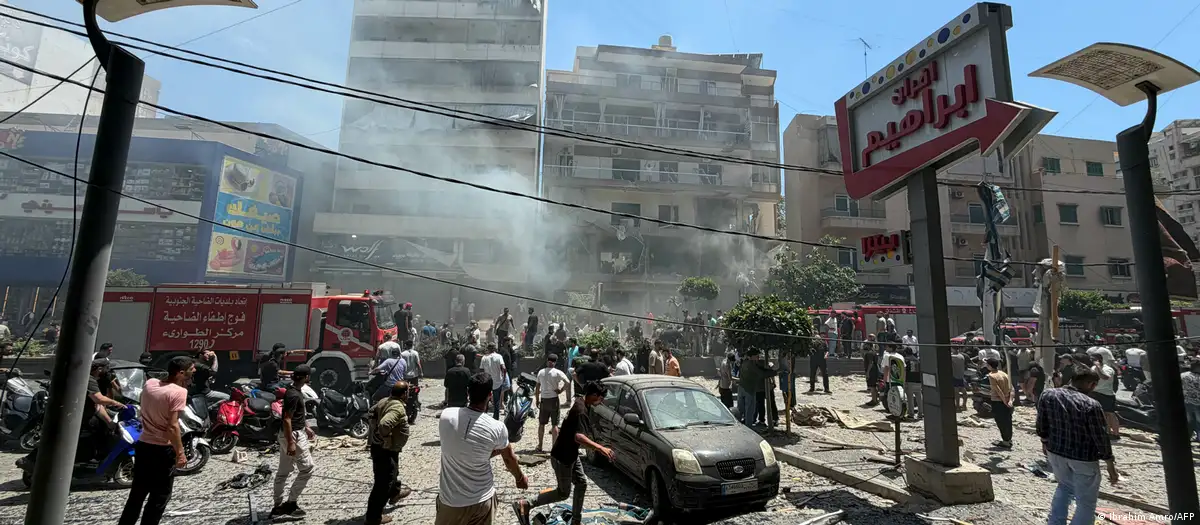
What you need to know
- Trump says peace deal with Iran 'very close'
- US President warns warring parties not to 'blow it'
- The president specifically called on Israel to stop strikes on Lebanon and Hezbollah to refrain from attacks as well
- Pakistan's Prime Minister Shehbaz Sharif said Saturday he expected a finalization of the deal in 24 hours
- But Iran's Islamic Revolutionary Guard Corps had denied plans for a Sunday signing
Tired of missing our real-time updates? Click here to add us as a Preferred Source on Google.
Keep reading here for updates on the Iran war on Sunday, June 14:
UN chief condemns Israeli strikes on Beirut
UN Secretary General Antonio Guterres has strongly criticized Israel's strikes in Lebanon at a key moment in efforts to reach a peace agreement between the US and Iran.
"I strongly condemn today's Israeli strikes on Beirut," Guterres said in a post on X.
"The strikes took place despite the ceasefire & at a time when the US & Iran are expected to reach an agreement that will pave the way to a peaceful resolution of this conflict," the UN chief said.
Guterres urged all parties to exercise "maximum restraint at this crucial moment" and said he was hoping for a "successful outcome.
Senior Iranian commander says forces have 'finger on the trigger'
A top Iranian commander says forces have their "finger on the trigger" and have warned Israel that they will attack in the event of a "mistake."
"We are waiting for the smallest mistake by the aggressive enemy to teach them an unforgettable and final lesson," state news quoted Major General Ali Abdollahi, commander of the Khatam al-Anbiya Central Headquarters, as saying.
The warning comes after Israel launched strikes against Hezbollah targets in Beirut, the attacks coming amid a sensitive phase in peace negotiations between the US and Iran.
Iran's president says top security authority backs 'path of dialogue'
Iranian President Masoud Pezeshkian said the country's top security body was backing the "path to dialogue."
"The Supreme National Security Council has concluded that the path of dialogue should be pursued," Pezeshkian said during a discussion with media executives, according to the presidency's website.
Pezeshkian said that the council was responsible for "decisions regarding war and negotiations."
Israel, Hezbollah should stop strikes against each other: Trump
US President Donald Trump called on Israel to stop carrying out strikes in Lebanon.
"We are very close to a deal that would bring peace to the region, including in Lebanon, and all sides should stand down," Trump posted on his Truth Social account.
"There should be no more attacks by Israel anywhere in Lebanon, but there should also be no more attacks by any other party, including Hezbollah, against Israel," the US president added.
According to Trump, the current negotiations could lead to a "long and beautiful peace," calling on all sides not to "blow it."
Iranian official promises response to Israel's Beirut strike
A senior Iranian military official said the Israeli strikes on Beirut will not go "unanswered," local media reported.
"Without a doubt, these crimes will not go unanswered," Brigadier General Mohammad Jafar Asadi, deputy commander of Iran's highest military command, told Defa Press news agency.
Iran previously promised that any Israeli strikes on the Lebanese capital would result in a response by Tehran, and such an attack led Tehran to several ballistic missiles in Israel's direction earlier this week, with Israel carrying out strikes in Iran in response.
Iran criticizes Washington after Israel's Beirut strike
Iran's top negotiator with the US criticized Washington after Israel's strike in Beirut, saying it provides proof that the US "either lacks the will to implement its commitment or lacks the ability to do so."
"If you can't fulfill your commitments, speaking of continuing the path is impossible," Mohammad Baqer Qalibaf said on his X account.
Lebanese authorities said three people were killed after the Israeli airstrike on the Dahia neighborhood in Beirut, an area known to be a stronghold of Iran-backed Islamist militia Hezbollah.
Israel's military says it launched strikes on Hezbollah targets in Beirut
Israel's military carried out strikes targeting "Hezbollah infrastructure" in a Beirut suburb known as a stronghold of the militant group, Dahiyeh.
This comes after several drones exploded in northern Israel, close to the border with Lebanon, with the Lebanon-based Islamist militia Hezbollah likely behind the launches.
Iran has previously promised to respond to every strike on Beirut with an attack on Israel, and it remains to be seen how Tehran will respond to the attack amid reports of an imminent deal with the US.
More strikes in Lebanon on Sunday
Israel's military issued an evacuation warning for residents of 16 villages in southern Lebanon, while three drones struck a region in northern Israel that's close to the Lebanon border.
No injuries were reported from the drone strikes.
This comes as escalation between Israel and Lebanon-based Islamist militia Hezbollah continues, despite ongoing negotiations between the US and Iran—Hezbollah's backer—and reports of an imminent initial deal.
While Israel has maintained a military operation in southern Lebanon, Iranian officials have repeatedly said they want any ceasefire to also apply there.
Far-right politicians in Israel's government have also been pushing for a stronger response to Hezbollah's drone launches, including strikes on Beirut.
Lebanese President Joseph Aoun has called on Israel to halt the attacks and seek peace with Lebanon, while Israel claims Hezbollah is a hurdle to any such deal due to Iran's influence.
No final decision yet on US agreement — Iranian media
Iran has not made a final decision on the agreement with the US that would temporarily settle the war between the two countries, Iranian news agency FARS reported, citing "a well-informed source close to the Iranian negotiating team."
Iranian hardline figures are known to be opposed to the agreement, arguing that it would deprive Tehran of leverage over the Strait of Hormuz.
Donald Trump has repeatedly claimed that both sides were close to a deal but there appears to be an explicit confirmation from both sides this time that there was some agreement reached over the text of the interim deal.
Qatari delegation in Tehran for talks — reports
A Qatari delegation is in Tehran for talks regarding the agreement to end the war between the US and Iran, Iranian media and Reuters reported, citing sources.
According to Iranian news agency ISNA, the delegation includes an adviser to Qatar's foreign minister.
While US and Pakistani leaders have spoken about a potential signing of a framework agreement today, hardliners in Iran have shown opposition, leading Tehran to cast doubt on the timing.
IN DEPTH: What are the key sticking points in the Iran-US deal?
At the center of the US-Iran negotiations is Tehran's nuclear program, in particular the handling of what is believed to be around 400 kilograms (970 pounds) of uranium enriched to about 60%.
If further enriched, this material could theoretically be sufficient to produce several nuclear weapons — something the United States is seeking to prevent.
Iran's state-run IRNA news agency said that "Iran's right to enrich uranium and the retention of enriched material... will be emphasised with a view to their inclusion in the final agreement."
While the US has reportedly proposed a long-term moratorium of up to 20 years, Tehran has so far rejected this approach. Instead, talks have centered on a much shorter pause of around five years.
Read the full story here.
WATCH: Initial US-Iran deal should not be overestimated, expert says
The United States and Iran appear once again to be on the brink of an agreement to end their monthslong conflict, with mediators and officials pointing to tangible progress. But what is currently on the table is not a comprehensive peace deal but a short memorandum of understanding — a first step designed to halt escalation and reopen negotiations.
Speaking to DW, Aaron David Miller, a former Middle East advisor and negotiator for the US State Department, said: "What you've done is buy yourself a ticket, on both sides, to a negotiation that is going to be long and tedious."
At the heart of the talks are deeply complex issues: Iran's stockpile of highly enriched uranium, sanctions relief, control over the Strait of Hormuz, and broader questions of regional security. "All of these issues contain a universe of complexity and detail that will have to be ironed out," Miller said.
Lebanon reels from Israeli strikes
As much of the world grows optimistic about a breakthrough in the Middle East conflict, the reality in Lebanon tells a different story.
Israel, which is not a party to the US-Iran agreement, said it struck more than 70 sites in Lebanon, continuing its fight against the Iran-backed militant group Hezbollah. Israel has clashed with Donald Trump over Washington's demand that it reduce military action in Lebanon to allow Trump to reach a deal with Iran.
Iranian Foreign Minister Abbas Araghchi has suggested that the deal could also end the war in Lebanon, implying an Israeli withdrawal from the occupied areas in the south of the country. Isarel has repeatedly said it will not withdraw its forces.
On Saturday, the Lebanese army withdrew troops from a base in a southern village after Israeli troops advanced to a nearby area.
Pakistan and US say deal will be signed on Sunday, but Iran casts doubt
Deal or no deal? That's the question this Sunday.
US President Donald Trump and Pakistani Prime Minister Shehbaz Sharif said on Saturday that an initial deal to end the Iran war was scheduled to be signed on Sunday. Pakistan is mediating the deal between Washington and Tehran.
In a social media post, Trump said the Strait of Hormuz, a narrow sea passage vital to the global supply chain, would reopen for all nations after the deal is signed.
Iran closed the strait after the US launched its war against the country in February. The US then launched a counter-blockade of the strait in April, targetingall ships seeking to reach Iranian ports.
Pakistan's Sharif said the two sides had agreed to a framework for a peace deal and that Islamabad was preparing for an electronic signing on Sunday. That would be followed by technical-level talks.
But even before Trump's post, Iranian Foreign Ministry spokesperson Esmaeil Baghaei cautioned against commenting on the timing of the signing. "The possibility of this happening in the coming days cannot be ruled out," however, the signing "will not be tomorrow (Sunday)," he said.
Welcome to our coverage
Good morning and welcome to DW's coverage of the Iran war with some potentially hopeful news on the cards.
Both the US and Iran have said that the proposed deal, known as a memorandum of understanding (MoU) for peacemay be at hand But Iran has expressed skepticism over the timing of President Donald Trump's timeline for signing the agreement.
Today, we will see if a deal finally comes to fruition, which would extend the April ceasefire between the US and Iran and reopen the Strait of Hormuz gradually.
Here's what you need to know going into the day:
- Donald Trump claimed a deal with Iran "is scheduled to be signed" on Sunday.
- On Saturday afternoon, Pakistan's Prime Minister Shehbaz Sharif said a deal would be finalized in the next 24 hours.
- Trump promised that the Strait of Hormuz would be open "TO ALL" right after the deal.
- Under the deal, Iran will not have a nuclear weapon but will not immediately hand over enriched material as Israel has insisted.
- Iran's Islamic Revolutionary Guard Corps said a peace deal is close but won't be signed on Sunday.
- Israel's military appears to be trying to make as many gains as possible in case a US-Iran agreement is reached, which is likely to include Lebanon.