South Africa's informal miners fight for survival
South Africa plans to phase out coal as an energy source, but remains one of the world's top producers. Every day, informal miners risk their lives to dig up the fossil fuel, fighting for recognition.
Shattered dreams
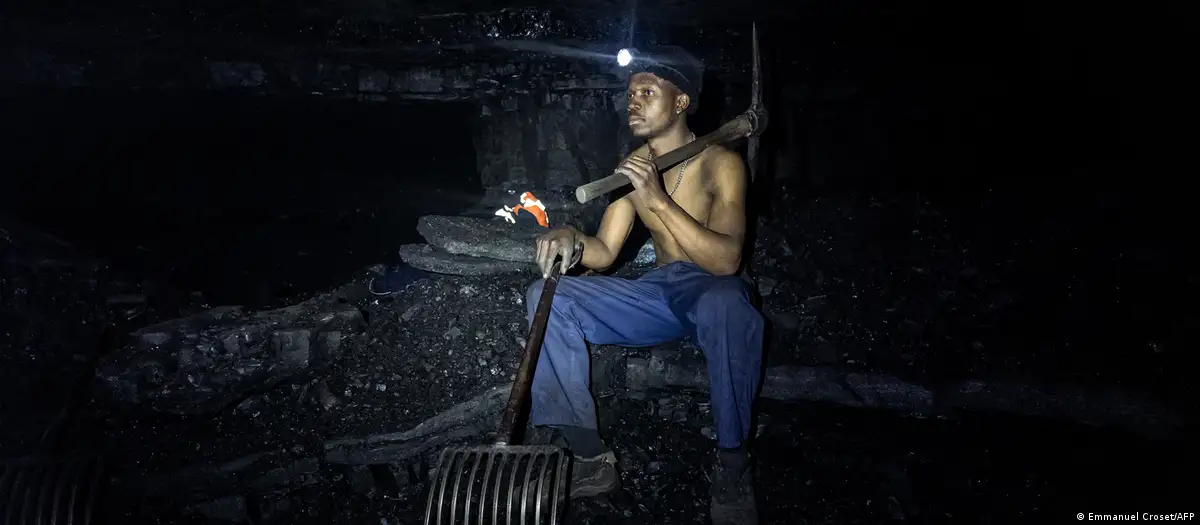
In an illegal mine near Ermelo, deep in the coal heart of eastern South Africa, the blows of pickaxs echo through narrow, dark tunnels. One of the men working here, who calls himself Cyprial, once had dreams of becoming a lawyer. But down here, between black rock and stifling air, that dream seems far away.
Sweaty drudgery
The rumbling of wheelbarrows echoes through the narrow tunnels where Cyprial and dozens of others have been working since dawn. Dim lights on their helmets barely illuminate the darkness. Some carry loads of up to 100 kilograms (220 pounds) through the labyrinth of tunnels, up to the surface to trucks that deliver the coal to informal traders in nearby Ermelo.
Daily risk
Only a few small tree trunks support the rocks above the entrance — a simple hole in the embankment of a hill where a mining company once operated. The hill is a remnant of earlier coal mining operations, a visible memorial to decades of exploitation. South Africa is one of the world's largest coal producers; around 80% of its electricity comes from this fossil fuel.
No other choice
"Down the shaft, it's pitch black. You cannot even see your finger," Cyprial told the AFP news agency. He is afraid the mine will collapse one day. "Half of the youth from here in Ermelo are doing this job," he added. In Mpumalanga, the South African province these young men call home, unemployment stands at 34% according to current government figures — above the national average of 31.9%.
Life without electricity
Although coal from Ermelo supplies cities at home and abroad with electricity, many local people live in huts without electricity. The government refers to workers like Cyprial as "illegal miners" and says they are a "menace" to the economy and security. They prefer the term "artisanal mining," and emphasize that their work — even if it isn't officially sanctioned — is important for the community.
Electricity from coal too expensive
The electricity generated by the formal coal industry is simply too expensive for many locals, according to Jabulani Sibiya, who heads Ermelo's artisanal miners' union. "This coal, we transport it to communities so those people can use it to cook and to warm themselves," said Jabulani Sibiya, who chairs Ermelo's artisanal miners' union. "It's not fair."
Tied up in red tape
The miners from Ermelo have applied for a collective mining permit. But the process is expensive and lengthy, said Zethu Hlatshwayo, spokesperson for the National Association of Artisanal Miners. Land, permits and environmental approvals are needed, he explained. In addition, a rehabilitation fund must be set up to restore the site after mining is completed.
Smaller, sustainable projects
Hlatshwayo said ordinary people must also have access to South Africa's mineral resources. Only in this way, he said, can "the injustices" of apartheid be corrected, when the most profitable mining was reserved almost exclusively for white people. His goal: to move away from destructive large-scale mining toward smaller, more sustainable projects involving communities.
Looking for a 'just transition' to green energy
South Africa is slowly beginning to move away from coal. The change was triggered by the $8.5 billion agreement for a just energy transition that was agreed upon at COP26 in 2021. But many communities in mining regions fear being left behind again — just as they were during the decades when they saw little benefit from coal mining.