Why Greenland cannot be 'owned' by anyone
Donald Trump's ambitions to buy Greenland aren't just controversial internationally — they're at odds with Inuit conceptions of ownership and Greenlandic law.
Small country on the world stage
Greenland has suddenly become the focus of global politics. US President Donald Trump has repeatedly made it clear that he wants to "own" Greenland. For the Inuit, however, the land in the Arctic belongs to no one. Property is shared collectively, and this is regulated by law: People can own houses, but not the land on which they stand.
Trump's Greenland plan 'so strange' to locals
Greenland's landscape is rugged, with deep fjords cutting through the coastline. In remote regions, it's all about survival, not global politics. Kapisillit, a tiny village on a fjord east of the capital, Nuuk, has fewer than 40 inhabitants. "We can't even buy our own land ourselves, but Trump wants to buy it — that's so strange to us," one villager told the Reuters news agency.
A pier, a school, a shop
Kapisillit only has the basics: a school, a shop and a small emergency medical clinic. Weekly food deliveries reach the tiny village by ship, and fishermen set out from the pier to catch fish. Inuit have lived here for generations. The idea that you cannot own land is part of their identity. Even 300 years of colonization have not changed that.
Responsibility instead of ownership
Some 90% of Greenland's population are Indigenous Inuit. They have lived in the ruggedly beautiful country for more than 1,000 years. For the Inuit, it's about who takes responsibility for the land, not ownership of it. "We've always had a free life here in nature," explains village leader Heidi Lennert Nolso. "We can sail and go anywhere without restrictions."
A shrinking population
Kapisillit once had nearly 500 residents, but many moved away for a better education and work. Today, teacher Vanilla Mathiassen teaches only three children. US political interest in Greenland plays little role in the village. Daily concerns matter more, such as keeping the fridge stocked or heading out early to hunt.
'I'm staying here'
Kristiane Josefsen is a seamstress in Kapisillit. She uses seal skins to make traditional Inuit clothing. Working with the skins is physically demanding, and the 67-year-old will retire next year. She doesn't want to move to a larger city in her old age. "I’m staying here. I belong here," she said. "This is my land. Greenland is my land."
A village at risk
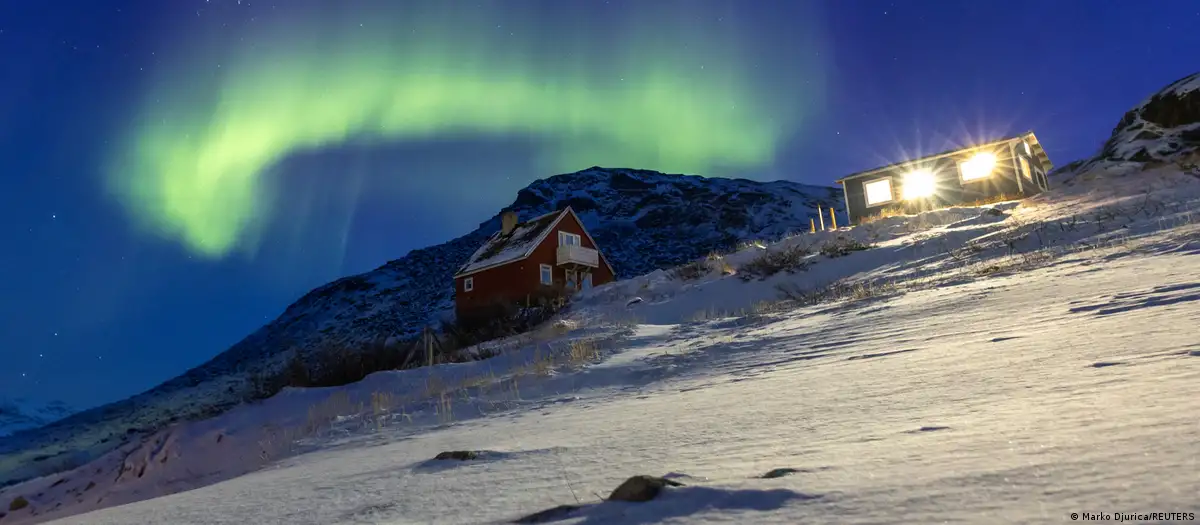
In the Arctic darkness, village chief Heidi Lennert Nolso rides a quad bike through the snow. "People are getting old," said Nolso. "There's a risk the settlement could die." The impressive natural surroundings in Kapisillit attract some wealthy city dwellers to the village's vacation homes, but the local infrastructure is difficult for tourists to access.
Guardians of the land
Trump has since distanced himself from his threats that the US could take Greenland by force. The concept of communal land ownership is of central importance to the Inuit. Rakel Kristiansen, from a family of shamanic practitioners, explains that the Inuit see themselves as temporary guardians of the land: "The land existed before us, and it will exist after us."