In Nigeria, Muslim girls fight for their soccer dream
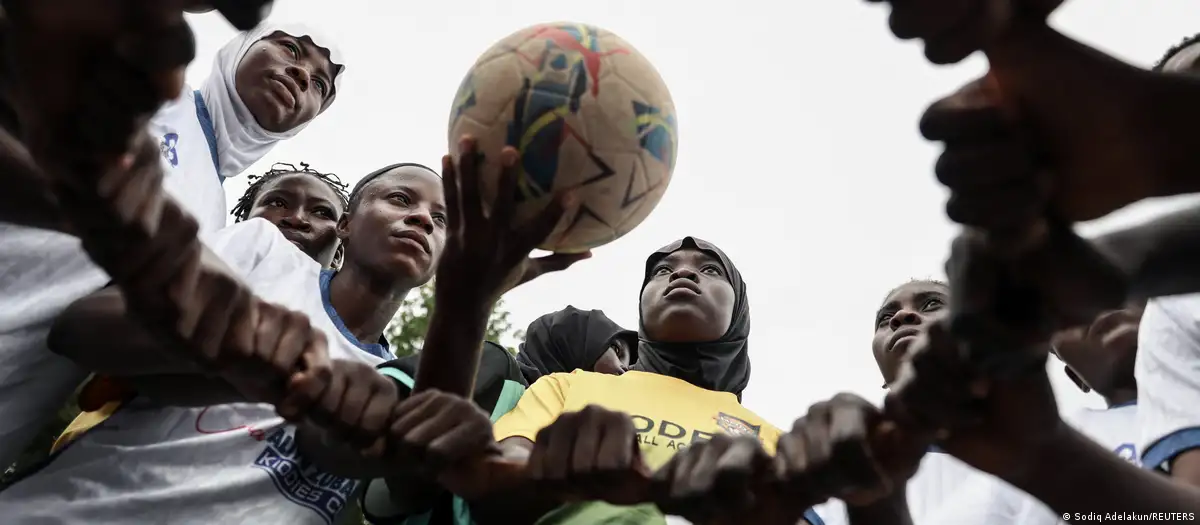
In the Muslim-dominated state of Kwara in western Nigeria, where religious traditions influence everyday life, a group of soccer-loving girls is challenging prevailing cultural norms.
Soccer ambitions despite the odds
When Maryam Muhammed laces up her soccer shoes and heads to practice at a local school in Ilorin, she feels the oppressive heat, which is intensified by her hijab and leggings — and at the same time, the disapproving glances of some community members. Muhammed, 17, is regularly ridiculed when she goes to her training sessions at the Model Queens Football Academy.
Cultural and religious barriers
Ilorin is the capital of Kwara State. Despite growing interest, women's participation in soccer remains low, local soccer official Ambali Abdulrazak told Reuters. Due to many cultural and religious reservations, soccer is still considered inappropriate for girls in the eyes of many. But grassroots efforts are growing.
Importance of faith
"They tell me I won't achieve anything. But I believe I will achieve something big," said Muhammed. Despite the inconvenience, it's important for her to cover up when playing, rather than wearing shorts and a T-shirt. "Sometimes it feels like I want to open the hijab, but I must not expose my hair," she said. "I have to put it on as a good Muslim."
Family solidarity
Muhammed's mother, Kehinde Muhammed, has been criticized for allowing her daughter to play. "So many people discouraged me," she said, proudly showing off her daughter's medal. "But I respect my children’s decisions. I support her and keep praying for her." She sews hijabs for the team to match their jerseys.
Hijab in women's soccer
Hijabs, which cover the head and neck, were banned by FIFA, the world soccer association, in 2007 for so-called safety reasons, resulting in the Iranian women's team being excluded from a qualifying match for the 2012 Olympic Games. The ban was relaxed in 2012 and the hijab was fully reinstated in 2014.
Changing perceptions
Model Queens coach Muyhideen Abdulwahab constantly motivates his team and tries to change perceptions. "We go out to meet parents, to tell them there are laws in place for modest dressing," he said. "Despite that, some still say no."
Women's soccer gaining popularity
The sport is growing in popularity across Nigeria, driven by the success of the women's national team, the Super Falcons, as well as increased sponsorship activities and grassroots programs. The Nigeria Women's Football League (NWFL) is one of the strongest leagues in Africa and is led by southern clubs from cities such as Lagos and Port Harcourt.
Soccer as a meeting place
Public spaces in Nigeria often transform into lively gathering places during soccer matches. NWFL attendance has increased by 40% since 2020, with match attendance up 35% in 2024, according to Nigerian media company iTelemedia, which tracks attendance figures in local leagues.
'Football is my dream'
After a defeat, Maryam Muhammed retreats quietly to her room and watches a soccer game on her smartphone. The support of her family and her faith give her strength and stability. "I really love this sport. I have passion for it," she said. "Since my parents support me, there is nothing stopping me. Football is my dream."